

Travel Notes from Hong Kong to Macau
When Cathay Pacific flight CX798, carrying us from Soekarno-Hatta International Airport, landed softly in the early morning at Hong Kong International Airport, Chek Lap Kok, the cabin was still chilled by the scent of metal and coffee. Through the windows, the runway appeared to circle over the sea. But that day, we had no intention of exploring Hong Kong. Our goal was simple: to exchange our old Oktopus cards for new ones and then continue our journey to Macau—a tiny territory in the Pearl River Delta that was under Portuguese rule for more than four centuries before finally returning to China in 1999.
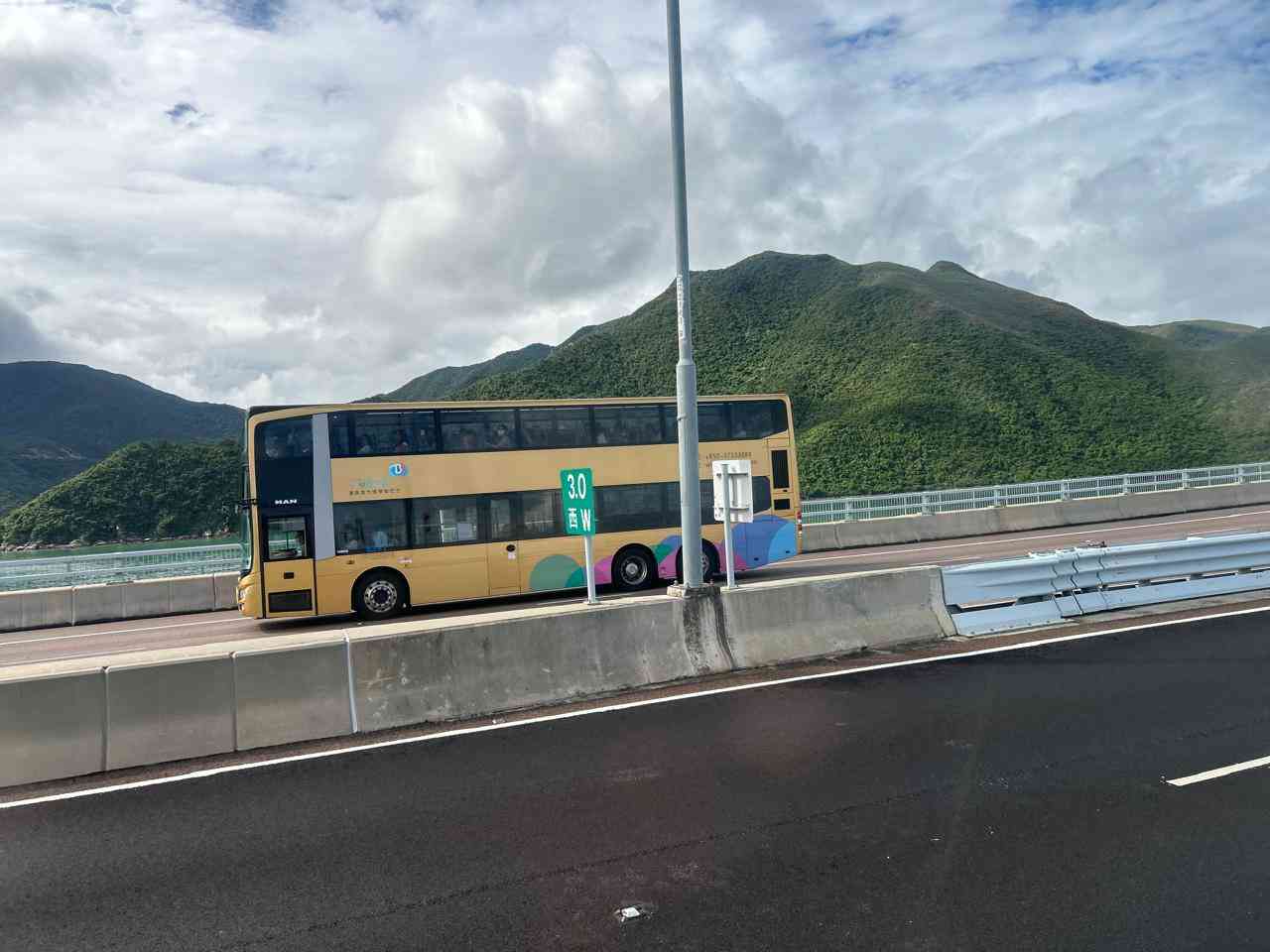
Travelers typically cross to Macau by ferry from Sheung Wan, enjoying a one-hour journey over the waves of the South China Sea. But this time, we chose a less traveled route: crossing the sea by bus, crossing the Hong Kong–Zhuhai–Macau Bridge, a magnificent bridge over 50 kilometers long and touted as the longest sea bridge in the world.
From the Airport Terminal to the Sea
Chek Lap Kok Airport felt like a time machine that morning. At the arrivals terminal, I asked the attendant for the bus number to the Macau Bridge Terminal. The answer was brief: “Bus B4, get off at the third floor.” Like most things in Hong Kong, the explanation was efficient, to the point, and true.
Bus B4 arrived about seven minutes later. Passengers boarded in an orderly fashion, tapped their Oktopus cards on the reader, and then sat in the quiet, typical of a developed city. The short drive through the airport felt like the opening scene of a science fiction film: rows of runways, gleaming terminal buildings, and in the distance, the silvery blue sea awaiting. Just eight minutes later, we arrived at the imposing terminal, which looked more like an airport than a bus station.
The immigration process out of Hong Kong was quick and efficient. Those with Frequent Visitor e-Gates cruised through without a hitch, while the rest waited in a manual queue that moved quite quickly. Afterward, we purchased our bus tickets to Macau for 65 Hong Kong dollars—payable with cash or Oktopus cards at the vending machine. Here, everything operates with a logic and order that feels reassuring.
Crossing the Bridge Over the Sea
The bus departed after its seats were filled. Outside, the sky was still soft with morning light, and a thin mist danced across the water. From the window, we watched the rows of planes parked on the airport apron, then slowly giving way to the vast ocean. The bridge began to stretch before our eyes—as if challenging the horizon.
Uniquely, on this bridge, the direction of traffic changes. Hong Kong and Macau are accustomed to driving on the left, but on this bridge, cars drive on the right—in keeping with mainland China’s system. The transition felt symbolic, as if this journey wasn’t just crossing regions, but also systems, and across histories.
Halfway through the journey, the bridge seemed to disappear. The bus entered an underwater tunnel that stretched several kilometers, piercing through the earth and reappearing above the water’s surface toward Macau and Zhuhai. From here, two routes diverged: one to Zhuhai on the mainland, and the other to Macau. Our bus took a left—toward the former Portuguese colony—and before long, it reached the gleaming terminal on Macau’s waterfront.
Between Portuguese and Chinese
As soon as we disembarked, we walked to the Macau immigration post. The atmosphere was immediately different. On the walls and signs, English sat side by side with Chinese characters and Portuguese—a legacy of the past that still lives on in every street name and government institution.
The immigration process was quick and without much formality. There was no stamp in the passport, just a small slip containing the arrival date and a 30-day stay permit. This tiny slip was a must-have—it would be requested both during our hotel stay and upon departure from Macau.
The Macau arrivals terminal was simpler, but still tidy. We had been looking for a free shuttle bus like those available at the ferry terminal, but the officer informed us that there was no such service at this terminal. He suggested we take public bus number 102X for six patacas, which also accepts Hong Kong dollars.
A Voice from Java
We were walking leisurely toward the bus stop when suddenly a man in his forties approached. He spoke quickly, with a distinct East Asian accent—but not in English, Mandarin, or Cantonese. Instead… it was Javanese.
“Arep menyang ngendi, Mas?” he said lightly, as if we were standing at Tugu Station, not in Macau.
I was stunned. The man looked like a typical Hong Kong or Macanese, but his speech was fluent, even familiar. A blend of ngoko and krama, imperfect, but fluent enough to leave us stunned.
Smiling, he showed us a photo of an Alphard-like minibus on his phone. He offered a tour of Macau: Leal Senado, the ruins of St. Paul’s Church, and Taipa Island. The starting price was HK$400 per person, which was later reduced to HK$1,200 for the entire group after we politely declined. He tried to convince us, even suggesting we leave our luggage at the hotel and join the tour before check-in, which started at 3 p.m.
But we still politely declined, saying we wanted to rest first. The man, unfazed by his smile, simply nodded and said quietly, “Yes, I’ve met you, sir.” He then left, leaving us still in disbelief that we were speaking Javanese in the middle of a Macau terminal.
Between Two Worlds
We finally boarded a public bus to the hotel. Along the way, Macau’s architecture resembles a living mosaic: Baroque churches sit side by side with incense-scented Chinese temples, illuminated Latin signs sit alongside Han Chinese, and grand casinos stand a short distance from pastel colonial-style houses. Everything blends seamlessly without canceling out the other.
The encounter with the Javanese-speaking man was a small reminder that the world is more connected than we think. In a city that is at the crossroads of Portuguese and Chinese, I found echoes of Javanese soil—a language that has transcended oceans and time.
In every journey, there are small, heartwarming surprises. Sometimes it’s a beautiful view, sometimes it’s just a brief encounter with an unexpected person. And in Macau, that surprise came in the form of a friendly greeting from a man who fluently said, “Arep menyang ngendi, Mas?” at the end of the world’s longest sea bridge.