

The day ended in a way I hadn’t expected. A day of walking through Lisbon’s hills had made my calves protest, but my heart still wanted to keep going. The yellow tram still occasionally went up and down the hills, dragging its wheels slowly as if enjoying the same route for decades. From a miradouro, I sat overlooking the sunset, sipping a warm coffee whose steam drifted with the Atlantic breeze.
As the sky shifted to a deep blue, I decided to find dinner. Not a restaurant with a long menu or a popular spot on the tourist timeline, but a small eatery near Martim Moniz station. The aroma of grilled meat wafted from the kitchen, seeping through the gaps in the wooden door. I went straight in.
I ordered a plate of grilled chicken, white rice, and fries. When it arrived, the portion was generous, served on a still-warm metal plate. The chicken skin was crispy, the inside juicy—just as my worries about it drying out vanished with the first bite. The potatoes weren’t evenly cut, more like a mom’s homemade meal when she was in a hurry but still wanted to satisfy her family. The rice was a bit dry and different from usual, but enough to satisfy my carbohydrate cravings.
It was less than nine euros, including a glass of hot tea with just the right amount of sweetness. It’s a small luxury in simplicity, something we sometimes miss.
As I ate slowly, I looked out the window. Martim Moniz never really sleeps. People passed by, the occasional tram dinged, and from somewhere I could hear someone singing softly. This area was like a crossroads, where various lives accidentally intersect.
After finishing my meal, I stepped outside. The stone sidewalk reflected the streetlights, creating a contemplative, shimmering effect. The air was humid, but still pleasant. My steps took me past rows of buildings, until I suddenly stopped in front of a small structure I initially thought was a closed shop. As I approached, I realized: it was a chapel.
Chapel of Our Lady of the Saúde
The chapel’s walls were plain white, with four simple pilasters guarding its front. Above the wooden door stood a small window with iron bars. The building was inconspicuous among the bustle of the city, but that was precisely why it felt inviting.
I approached, quietly reading the small inscription beside the door: Capela de Nossa Senhora da Saúde—Chapel of Our Lady of Health. It was said that this chapel was built after the city survived a 16th-century plague. Lisbon had been nearly paralyzed. The word “Saúde,” health, felt not just a prayer, but a memory of collective pain. The chapel was destroyed in the devastating earthquake of 1755, then rebuilt.
I stood silently in front of it, my hand touching the low iron fence that separated the chapel from the street. In the stillness of the night, I imagined someone hundreds of years ago standing in the same spot, offering a prayer that I might also be carrying—for safety, hope, serenity. I took a picture of the building. It was shaky, but for some reason I kept it.
Suddenly, a Rainbow
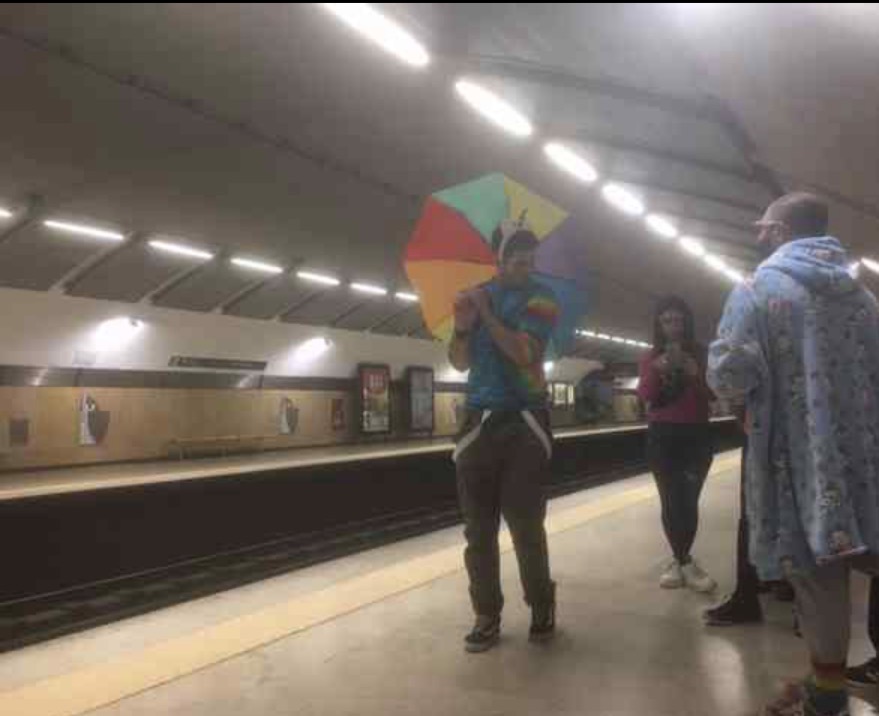
As I was about to turn around, a group of young people emerged from the park. They were a riot of color: purple hair, cartoon-print jackets, rainbow-print T-shirts. One carried a colorful umbrella that remained open even when it wasn’t raining.
There was a reflex fear. I grew up in an environment that stifled difference; anything “other” was often regarded with suspicion without a chance.
I backed away slightly, but one of them approached more quickly. His smile was wide.
“Boa noite!”
I paused for a moment. “Boa noite,” I replied slowly.
“Você é turista?”
I nodded, “May or less.” Half truthfully, half jokingly.
Our conversation continued in English. It wasn’t long, but enough to break down the walls of prejudice I’d long built in my head. They weren’t a threat. They were real, breathing, and didn’t judge back.
Those Who Celebrate Themselves
We walked together toward the metro station. One of them introduced himself: Miguel. His voice was soft but firm.
“We often gather here. Martim Moniz is quite safe. Lisbon has changed a lot,” he said.
I asked what kind of change.
“Portugal used to be very conservative. During Salazar’s time, we were considered a disease.”
Estado Novo: a regime of forced morality. I’d read that homosexuality wasn’t decriminalized until 1982.
“But now we can get married, right?”
Miguel smiled proudly. “Since 2010. And since 2016, we’ve been allowed to adopt.”
His next sentence left me speechless:
“We no longer seek acceptance. We live. We exist.”
On the Ligne Verde Platform
We stepped off the Linha Verde platform. Portuguese pop music played softly from someone’s cell phone. Those holding colorful umbrellas danced to the beat.
No one gave us a sidelong glance. No one yelled. People passed by unperturbed.
Lisbon allows people to be themselves.
I approached the umbrella owner. “You’re welcome, or you’re guarding me.”
He smiled, “Obrigado! Want to try?”
I laughed. “Talvez outra vez.” Maybe another time.
It was a small conversation, but for me, it was important. It unlocked something long locked: the courage to accept differences not as threats, but as part of life.
Returning to Alfarnelos
The train arrived. I sat in the corner of the carriage, watching the stations pass by: Baixa-Chiado, Jardim Zoológico, Praça de Espanha.
It was dark outside. But inside, my head was full of light. There was a small, quiet chapel, rainbow umbrellas, and the laughter of strangers who now felt close.
Arriving in Alfarnelos, I walked slowly to my small apartment on the ninth floor. The night air greeted me with a chill, but my heart was warm. That night’s journey wasn’t about changing space, but about shifting perspectives.
I opened the window and looked at the Lisbon skyline. There was no rainbow there. But I know I’ve seen it, not in the sky, but in the cobblestone streets, in the faces I once feared, and in my own heart.
Conclusion: The City That Embraces
Lisbon isn’t perfect. But it’s trying. It’s learning to embrace color, laughter, and diversity. The chapel once built during the plague now stands in a city slowly becoming healthier—not just in body, but in soul.
That night I went home with three pictures on my phone: a plate of grilled chicken, a white chapel, and a rainbow umbrella at the train station. Images that seem unconnected, but are actually united by a common thread of humanity, humility, and the courage to see the world through the lens of fear.
Three simple images that remind me: life, in the end, is just small encounters that quietly change us.