

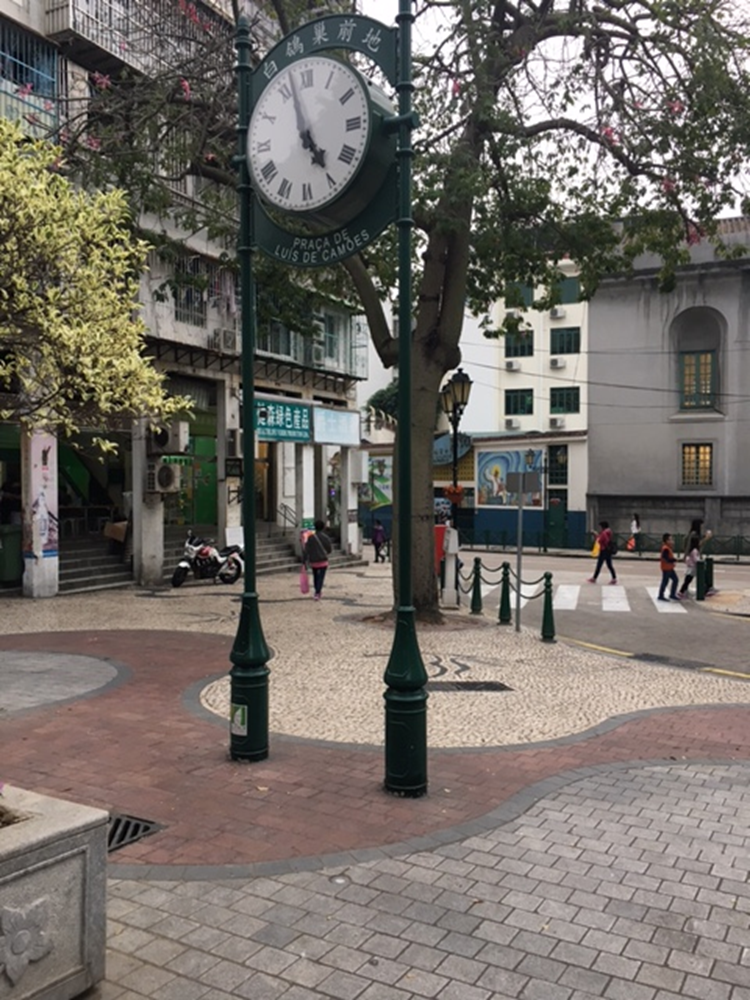
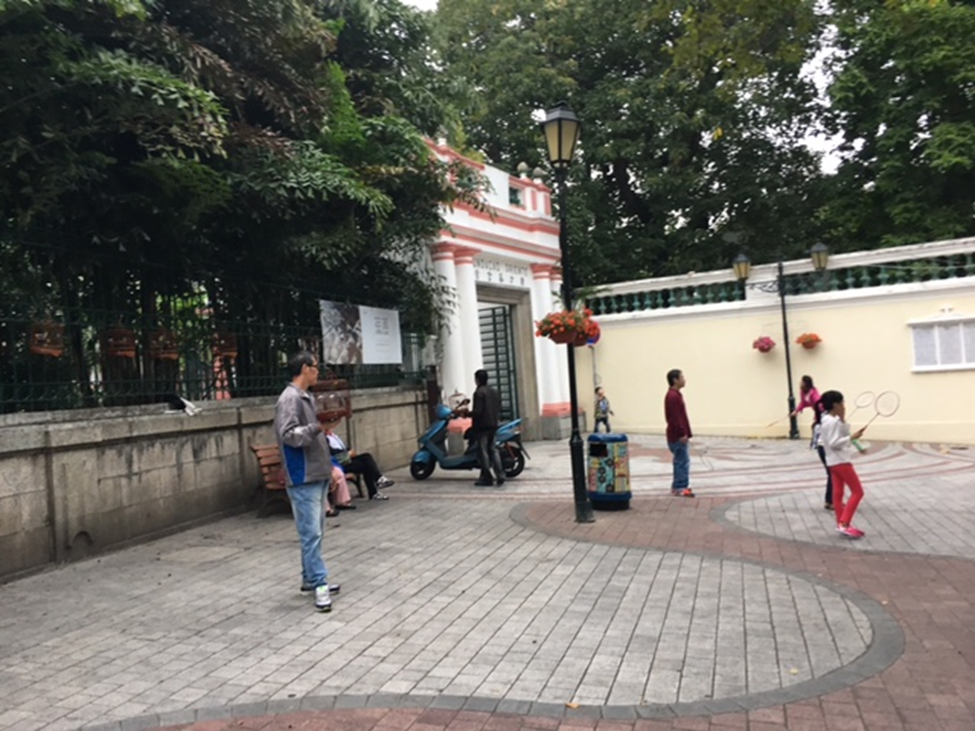
After visiting the Old Protestant Cemetery, I returned to Praca de Luiz Camoes. It was nearing dusk. Many Macanese residents were relaxing here, young and old, and even children. Some of the elderly were enjoying a game of chess, others were exercising, and children were even playing badminton.
In the corner of the park, there was a gate marked “Fundacao Oriente.” I took a quick peek and saw an old building with classic Macanese architecture and a spacious courtyard. The combination of pale white and dice gave the building a sense of both age and beauty.
Back at Praca de Luiz Camoes, rows of chairs were neatly arranged near the fence. Several bird cages hung on the dark green railings, making the area resemble a market on Jalan Pramuka, Jakarta. A man in his 50s stood holding a brown cage, wearing glasses, a gray-blue sweater, and light blue jeans. Her mouth whistled, singing a song for the bird.
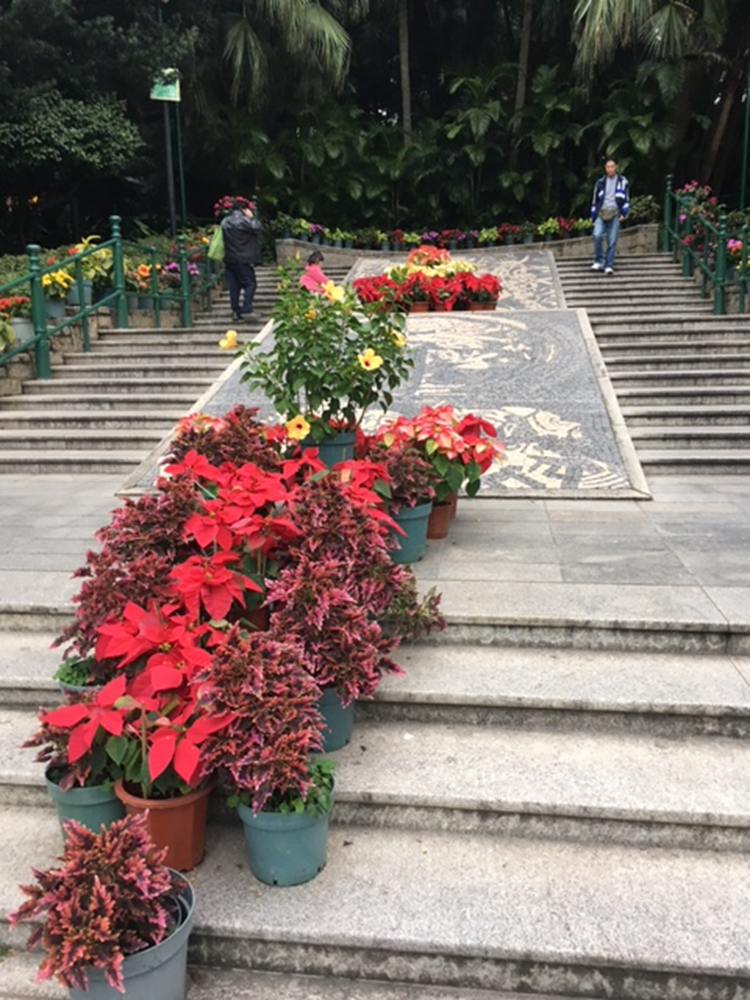
I then entered through the gate into a garden called Camoes Garden. Red flowers were spread out in pots and small gardens. Scattered around the garden were various types of sports and exercise equipment in bright colors: red, blue, yellow, and orange. Crowds of people sat and chatted on wooden chairs. Besides the elderly, there were also many children under the age of ten.
In the center of the garden stood a monument with a pattern of fairly tall trees. This bronze monument or statue, named “Embrace,” symbolizes the friendship between China and Portugal. A small fountain added to the beauty of this monument. The addition of red, yellow, and pink flowers and cone-shaped pine trees made the atmosphere of Camoes Garden even more relaxing. This was especially true with the gentle breeze blowing in the cool air of Macau in late December.
A grand, wide staircase, adorned with crimson and red flowers in the center and carved into the stone, reminded me of the grandeur of the Forbidden City Palace in Beijing, far to the north. Dozens of gently sloping steps made for a comfortable climb.

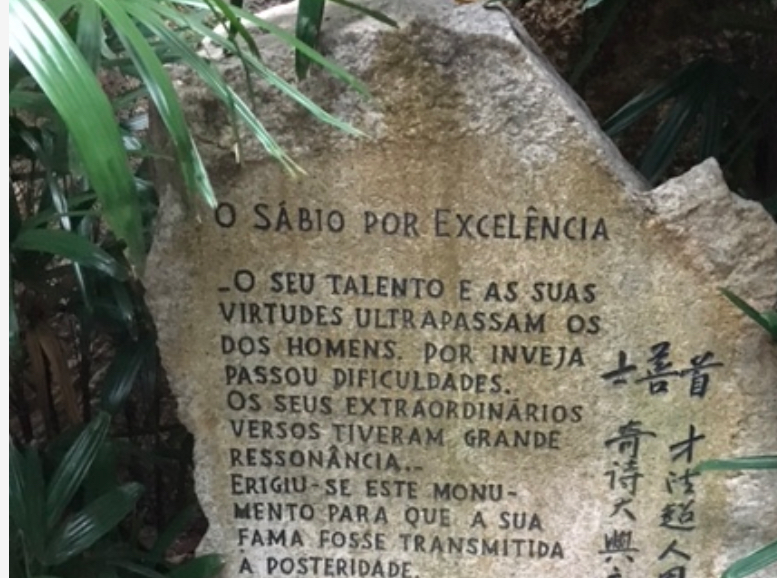
“O Sabio Por Excelencia, O seu talento e as suas virtudes ultrapassam os dos homens, Por inveja passou dificuldades”—a few lines in Portuguese—appears on a stone inscription. They praise the wisdom and knowledge beyond the average person.
This poem, apparently composed by L. Rienzi in 1829, concludes with the words “erigiu se este monumento para que sua fama fosse transmitada a posteridade,” meaning that this monument was erected so that its fame would radiate to seven generations.
“Comemoracaoes do iv centenario da publicacao de os lusiadas 10 de junho de 1972”, is written at the bottom of the inscription which states that this inscription was made on June 10, 1972 and was built to commemorate the 400th anniversary of the publication of Camoes’ most famous work, namely “Os Luciadas”. “Os Lusiadas” itself is often translated as “The Soul of Portugal.”
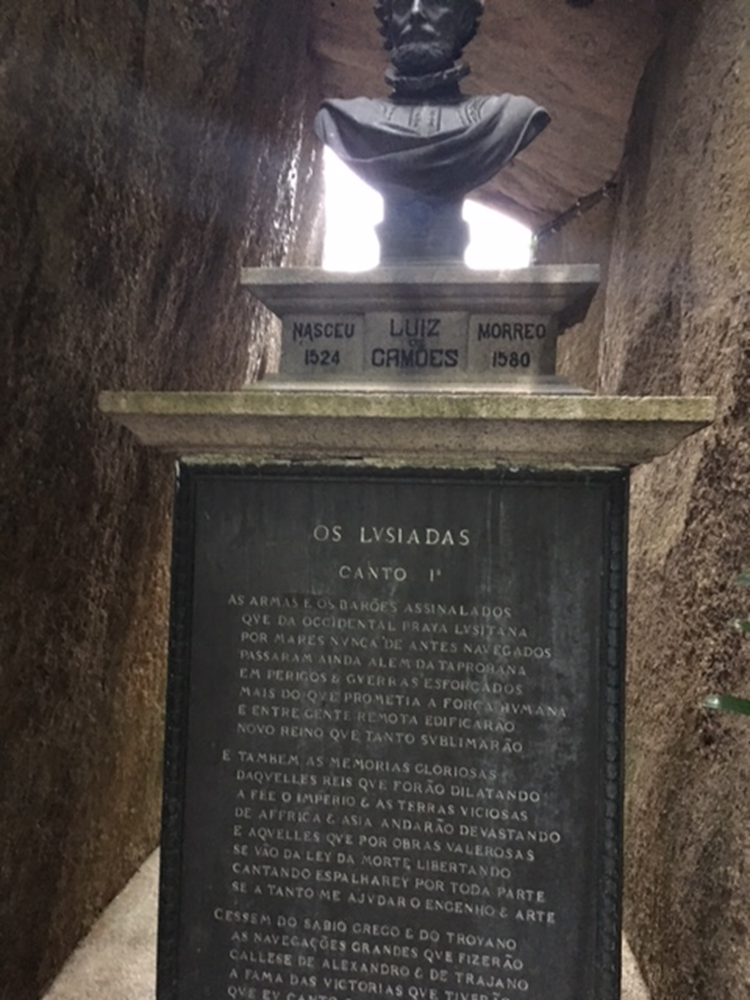
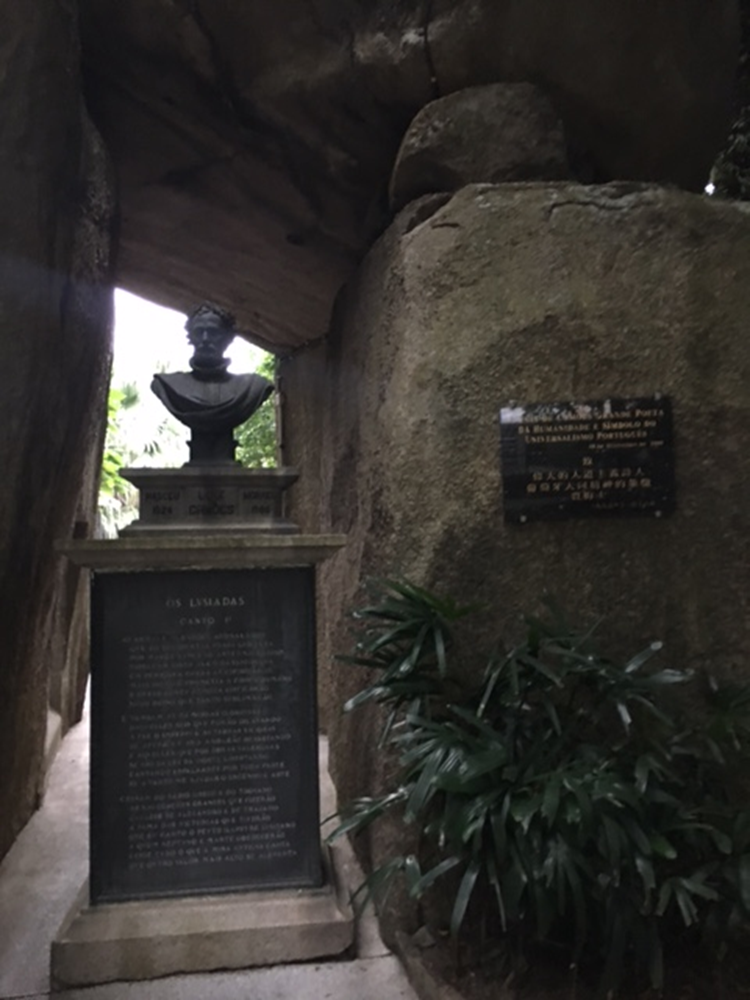
Not far from this inscription, in a grotto dedicated to Luiz Camoes, is a bust of the most famous poet in Portuguese history. Luiz Camoes is the name engraved beneath the bust. This name is flanked by the years of his birth and death, written in Portuguese: “Nasceu 1524 and Morreo 1580.”
To the Portuguese, Luiz Camoes is a poet comparable to Shakespeare to the English, Homer to the Greeks, and Cervantes to the Spanish. He is so famous and revered that Portuguese itself is sometimes called the “Language of Camoes.”
Luiz Camoes’ life story is full of drama and adventure. He was blinded in his right eye during a battle with the Morros in southern Morocco around 1549. He then returned to Lisbon and eventually set off for India in 1553. Fate then took him to the Far East, to the Portuguese colony of Macau was around the mid-1550s.
It was during these two years in Macau that the masterpiece “Os Luciadas” was written. This poem, which has been compared to Homer’s Illyad, consists of 10 cantos and has a total of 8,816 lines. The story is an epic tale of the heroism of the Portuguese who sailed the world and the oceans around the 15th and 16th centuries.
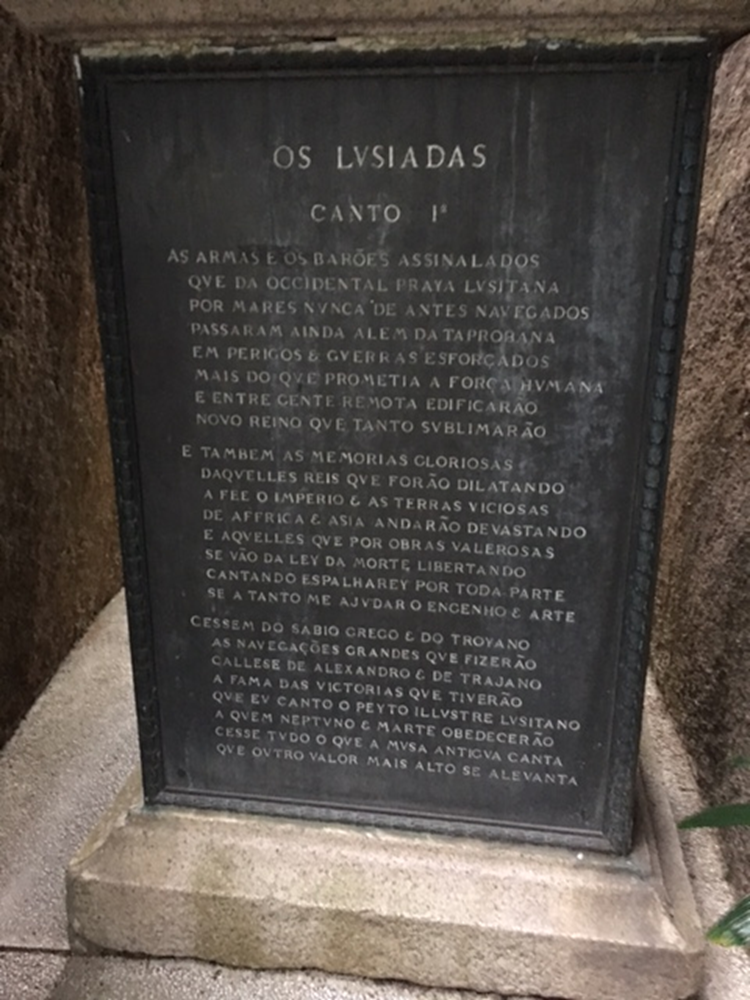
Still in the Camoes Grotto, directly beneath the bust of the poet, is carved an excerpt from Canto I of “Os Luciadas.”
“As arms and os barões assinalados,
As the western sea of Lusitana,
By the north seas of before sailing,
Passaram ainda além da Taprobana,
Am perigos and guerras forçados,
But what prometia a força humana,
E entre gente remota edificaram
Novo Reino, que tanto sublimaram;
“When weapons and knights are marked
On the west coast of the Lusitana
Toward uncharted seas
Sailing even beyond Taprobana
In Danger and the Raging War
Beyond human strength
And amidst isolated tribes, a new, glorified kingdom was built
The Camoes Cave and Garden, which covers more than 20,000 square meters, was once the residence of Luiz Caomes, and is said to have belonged to a Portuguese trader who loved keeping pigeons.
In this garden, we can not only get to know this one-eyed poet better, but also enjoy the unique atmosphere of Macau. A blend of Chinese and Portuguese cultures in harmony. This is especially true if we visit on June 10th, the anniversary of Camoes’ death, which is now celebrated as Portuguese national day.