

I’ve been to Japan several times, but most of those trips have taken me to the island of Honshu: glittering Tokyo, vibrant Osaka, quietly mournful Hiroshima. This time, my steps veered in a different direction—heading south, toward Kyushu. An island I’d only known from maps and stories.
I wanted to see a different side of Japan: a side that perhaps not many ordinary tourists touch, a side that might broaden not only my understanding of the country, but also the way I experience travel.
Our Cathay Pacific flight from Hong Kong landed smoothly at Fukuoka International Airport. The air felt warmer than Tokyo or Sapporo, as if welcoming us. The airport staff worked with the precision I’d come to expect from Japan—fast, friendly, and efficient. In just a matter of minutes, we cleared immigration and customs and headed to the domestic terminal. But this time, there were no connecting flights. The adventure began here.
Fukuoka is the largest city in Kyushu and also the first window into southern Japan. One advantage of this airport immediately struck me: its proximity to the city center. There was no long journey like from Narita to Tokyo. Just a few minutes by subway, we were in the heart of the city.
The airport metro station was clean, tidy, and modern. The automated ticket machines lined the streets, crowded with passengers from various countries, busy with suitcases and responsive touchscreens. We purchased a one-day pass for 640 yen—a significant savings compared to the 260 yen one-way ticket. After checking into our hotel, we planned to explore the city.
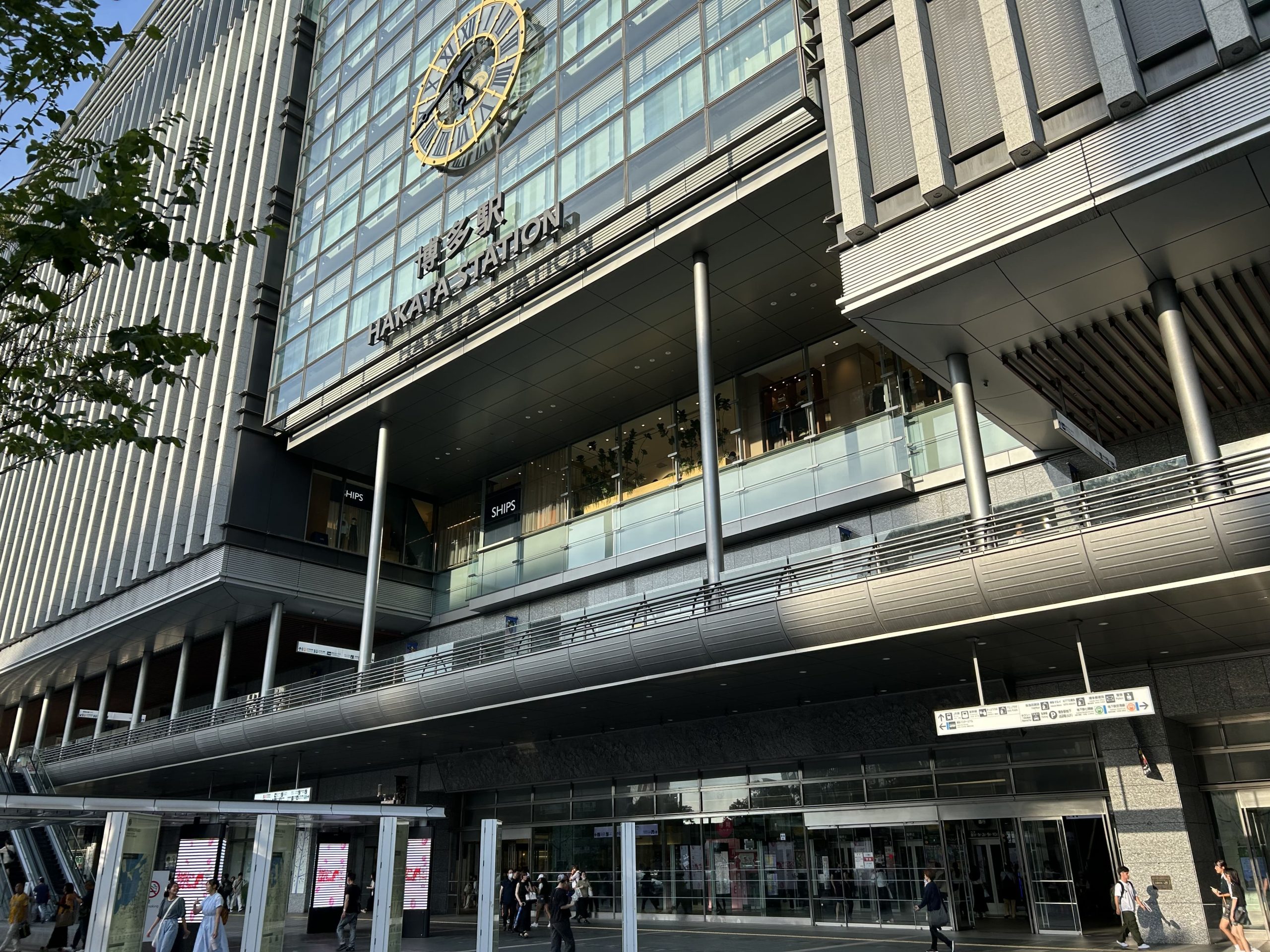
The Fukuoka City Subway Kuko Line took us to Hakata Station in just five minutes. Coded K13, this station is more than just a terminal. It’s the pulse of the city—a place where people move, meet, and wait. Japanese modernity is palpable: clean architecture, digital signage, and staff eager to help anyone who gets lost.
Our first stop was the JR Kyushu office to exchange the JR Pass we’d ordered online. This pass is valid for five days and covers the northern region of Kyushu: Fukuoka, Kumamoto, Nagasaki, Yufuin, Beppu, and Oita. Our itinerary was already well-planned, but today, Fukuoka was the main attraction.
Hakata Station is not just a transportation hub, but also a meeting point for many things: culture, food, and the rhythm of daily life. We wandered through its alleys, past ramen shops with the tempting aroma of broth, rows of convenience stores like 7-Eleven and Lawson, and souvenir shops selling mentaiko and manju.
I paused in front of a statue of a woman in a kimono standing gracefully in the courtyard. There was no English explanation, just kanji characters at the bottom. Who was she? An artist? A local figure? I didn’t know. But she stood there, a silent witness to the hustle and bustle that never truly ceased.
After checking in and resting for a while at the hotel—just a five-minute walk from the station—we headed back out as dusk began to fall. Fukuoka was slowly changing its face. The city lights gave off a different atmosphere: warmer, more personal. We returned to the station, this time with no particular destination in mind, just looking for dinner.
On my way, I found something I hadn’t expected to survive in the digital age: a green payphone. It was still on. It still worked. The digital words “International & Domestic” were displayed on its small screen. It had slots for coins and cards, complete with instructions and emergency numbers—110 for police and 119 for fire. I approached and touched the receiver. It was dust-free. It was truly alive.
That night we took the subway to Tenjin. The train cars were clean, quiet, and comfortable. Priority seats were marked in green with crisp white covers. In Japan, even the seats felt like thoughtful, small pieces of art. In Tenjin Underground Shopping, the atmosphere was relatively quiet. The hallways resembled more of a gallery than a shopping mall. We walked without rushing, without a clear destination—just taking it in.
Finally, we sat down at a small restaurant and ordered ramen. The broth was rich, and the bowl felt even more meaningful after the long journey. The warmth came not only from the steam, but also from the silence of the moment: sitting in a foreign city, with the people closest to us, enjoying a meal without the need for words.
After lunch, we returned to Hakata. Outside the station, the large signs “JR Hakata City” were brightly lit. This place wasn’t just a station. It was the pulse of the city—and perhaps the starting point of our long journey in Kyushu.
That evening, I had a chance to chat with the hotel receptionist about the payphones I’d seen. She explained that the Japanese government still maintains these phones for emergencies. If a disaster strikes and the cellular network is down, people can still call essential services for free through the payphones. In a developed country like Japan, old technology isn’t simply discarded. It’s maintained, prepared for times of crisis. What a contrast to Indonesia, where payphones are now a distant memory.
The first night in Kyushu isn’t about the big destinations or famous tourist spots. It’s about the small details: the train arriving on time, the curious statue, and the payphone waiting patiently. It’s about how a city treats us as guests—with calm, warmth, and respect.
Tomorrow morning, we’ll board a train bound for Nagasaki, a city steeped in history and emotion. But tonight, I’ll sit by my hotel room window, gazing out at the darkening Fukuoka sky. A sense of gratitude creeps in. I’m here—on an island that was once just a name on a map. And the journey has only just begun.