

Hainan is China’s southernmost province—and also the only one entirely island. From the air, its shape resembles a drop of water falling into the South China Sea, as if destined to be a tropical paradise amidst the frigid Asian mainland. This is the island I was headed to for the next few days, on a journey that began at Soekarno-Hatta Airport in Jakarta.
After a flight of approximately four hours on a Lion Air Boeing 737-900, our wheels finally touched down at Phoenix International Airport (Fènghuáng Guójì Jīchǎng) in Sanya—also the southernmost city on Hainan Island. Landing in the early morning hours was a unique experience: the sky was still gray, the humid tropical air welcomed us, and the airport sign was in large Chinese characters against a soft yellow backdrop.
Sanya is often referred to as the “twin sister” of Haikou, the capital of Hainan province, located at the northern tip of the island. If Haikou is better known as a center of government and education, then Sanya is a beach town, a vacation destination, where people come to escape the cold northern winters. It’s no wonder many call Hainan the “Hawaii of China,” and Sanya its tropical heart.
One special thing for Indonesians is that visiting Hainan doesn’t require a visa. With just a passport and a round-trip plane ticket, you can enjoy this tropical beach with an oriental feel.
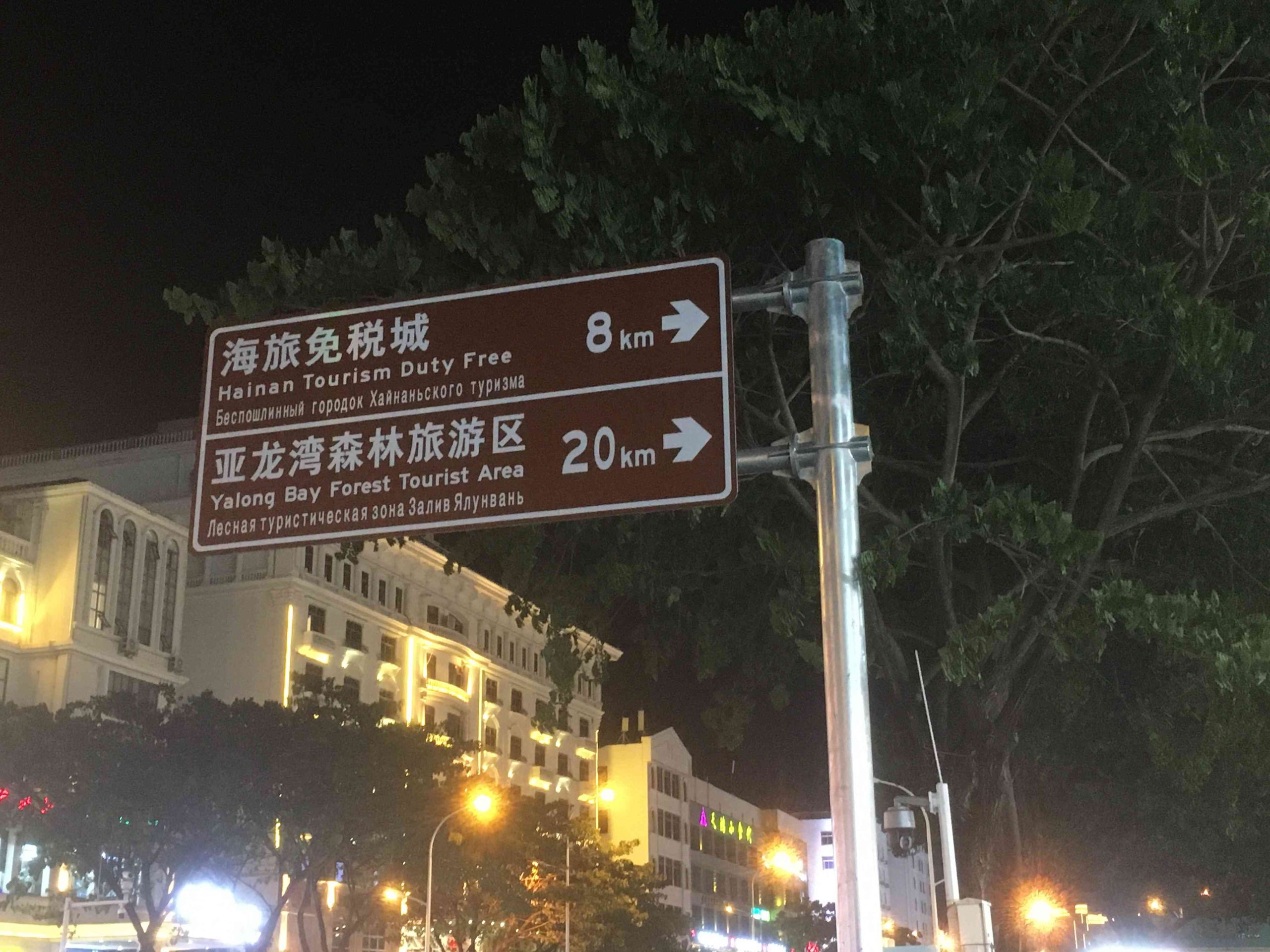
But something else immediately caught my attention as soon as I exited the arrivals hall: the airport signs written in three languages—Mandarin, English, and Russian.
At first, I thought this was only available at the airport, but the more I explored Sanya, the more it became clear that Russian had become the city’s second language—even before the pandemic.
Angela, our local tour guide, smiled at my amazement.
“Before COVID-19, there were a lot of Russian tourists here,” she said, adjusting the small microphone on her chest. “During winter in Russia, Sanya is a favorite escape. The weather here is always warm, even in January.”
That statement explains it all. In downtown Sanya, nearly every signage for hotels, restaurants, and even banks is written in three languages: Mandarin at the top, Russian in the middle, and English at the bottom. Even at the shark oil processing plant—a joint venture between the Chinese and Canadian governments—Russian ranks second in the official signage system. English has fallen to third place.
At Dadonghai Beach, Sanya’s iconic landmark, the Russian feel is even stronger. Many signs read “Добро пожаловать” (welcome) and restaurant menus feature borscht and pelmeni alongside fried rice. It’s no wonder this beach is often called “the beach for Russian expats.”
But what really captivated me was the Tianya Haijiao (天涯海角) tourist area—literally, “The End of the Sky, the End of the Sea.” It’s touted as the most romantic spot in Sanya, where giant rocks by the sea are adorned with classical calligraphy and ancient love legends. Here, signs in Russian sit alongside Japanese and Korean, as if Sanya is introducing itself to all of East Asia as a second home.
At night on Jie Fang Road, a never-ending shopping and walking street, the atmosphere becomes even more lively. Shop lights twinkle, the aroma of grilled seafood mingles with the perfume of local tourists, and amidst the hustle and bustle, Russian writing is once again visible everywhere: from traffic signs to boutique discount signs.
But there’s one small irony I can’t ignore. In my several days in Sanya, I haven’t encountered a single Russian tourist in person. The pandemic seems to have cut off the once-massive flow of tourists. But their traces remain in every corner of the city—on signs, on hotel towers, on restaurant menus, even in the accents of tour guides who still fluently pronounce the word “spasibo” (thank you).
Sanya may now be filled with mostly domestic Chinese tourists, but the memory of a time when thousands of Russian tourists sunbathed on Hainan’s beaches still lingers. It’s as if their language is an invisible spirit that keeps the memories of this city warm — even after they’re gone.